Business Friday 23 October 2026
UAE food retailers and producers vow to maintain stable prices despite Iran war disruptions
By Abu Dhabi Desk
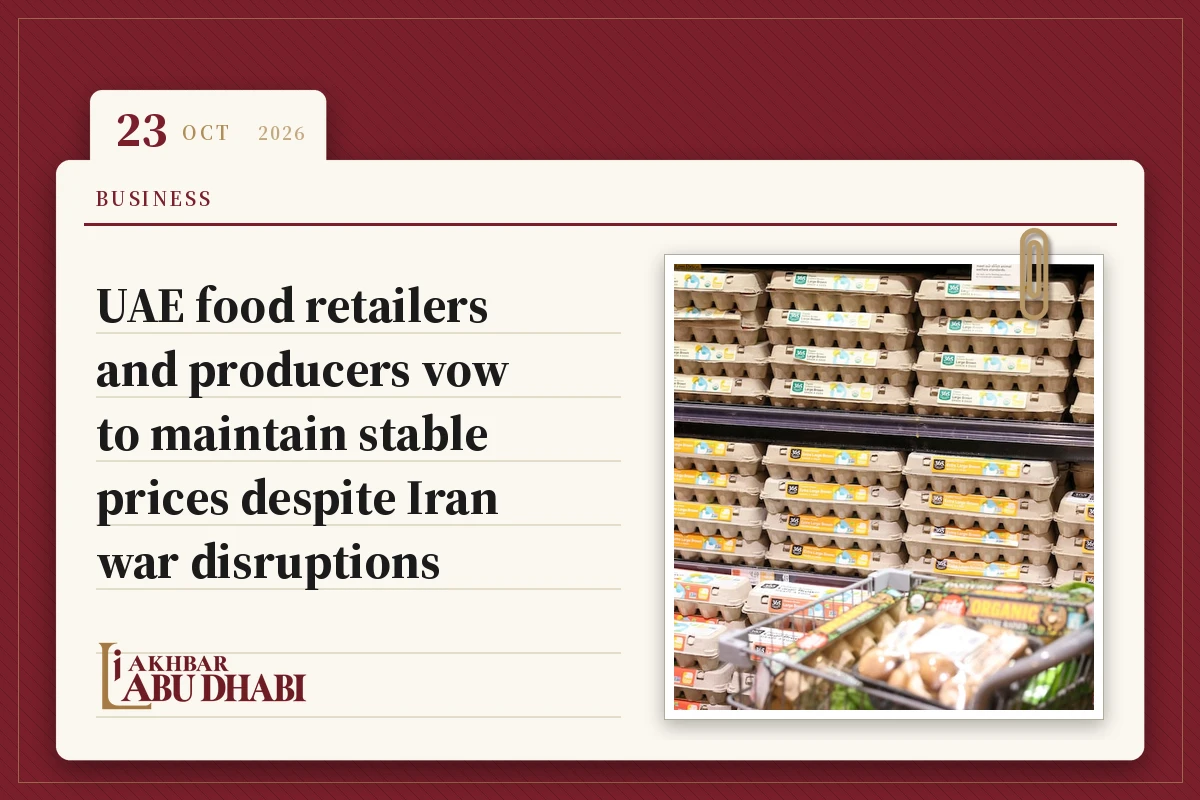
Food industry leaders in the UAE have pledged to keep prices in check and shelves well stocked as they work to mitigate the effects of the Iran war, which began on February 28 and has caused widespread regional disruption. The effective closure of the Strait of Hormuz, following attacks on commercial ships by Iran, has hit supply chains and driven up the cost of food, transport, insurance and energy globally.
Shamim Sainulabdeen, director of private labels at Lulu Group International, which runs more than 100 outlets in the UAE, said the retailer would follow government guidelines and avoid increasing prices on staples, commodities and essential goods. “We are a responsible retailer, so we are absorbing some costs. The government insists on keeping the price stable for our fast-moving staples,” he said. The supermarket company has chartered vessels to speed up deliveries instead of relying on shared shipping with other firms.
The Dubai Statistic Centre’s latest consumer price index showed food inflation rose to 8.05 per cent in September, up from 7.39 per cent a month earlier. A study by consultancy Redseer this year found that 78 per cent of respondents in the UAE noted higher grocery prices, and 51 per cent identified food inflation as their main concern.
Producers rely on contingency plans
For producers, keeping ingredients and farm supplies moving has been central to easing price pressure during challenging times. Tareq Al Hosani, chairman of Al Ain Farms Group, said the company had contingency plans in place before the war broke out. These included using Fujairah port, working with suppliers and contacts in Saudi Arabia and other neighbouring countries, and employing air freight. Strategic reserves of feed and other supplies provided an additional buffer for production. “We always had a plan B, plan C and a plan D to continue to be able to serve our market,” he said.
Mr Al Hosani said the company had taken on additional costs to minimise the impact on the public. Customer loyalty and growth in sales helped the company maintain profitability while limiting price changes. “We are trying to swallow as much as we can from that cost variation and we are trying to put the minimum on the clients because you know this is only a transition. It’s only a short period and we owe it to our clients who put their trust in us,” he added.
Conflict accelerates inflation, government acts
Nagham Hassan, a Middle East market analyst for investment platform eToro, said the conflict had accelerated the rate of global inflation. She said people were favouring more affordable options as they look to reduce discretionary spending. “Both Lulu and Spinney’s stated that private label sales increased, and usually private label is a more economic option than the other brands that are out there,” she said. More people are making trips to supermarkets, but are spending less each time, Ms Hassan added.
The UN Trade and Development agency has previously warned that higher energy, freight and insurance costs linked to the disruption in the strait could increase food costs and put pressure on household budgets.
In April, the UAE government launched the Essential Goods Prices Platform, overseen by the Ministry of Economy and Tourism, to monitor price changes on 8,343 products at 525 shops operated by 13 major retailers. The tool was expanded in August after recording 143,000 visits in the first four months. The government took action to protect customers from unjustified price increases after a surge in demand for essentials in the early weeks of the war. The ministry carried out more than 7,000 inspections of retailers in the two weeks after the conflict broke out. It said at the time that it was “intensifying monitoring efforts” to ensure price stability, particularly for nine essential goods – cooking oil, eggs, dairy products, rice, sugar, poultry, legumes, bread and wheat. The price of those items cannot be raised without approval from the ministry and a national committee set up to assess food costs.