Abu Dhabi Tuesday 20 October 2026
Abu Dhabi man with thalassaemia stops needing blood transfusions after gene therapy
By Abu Dhabi Desk
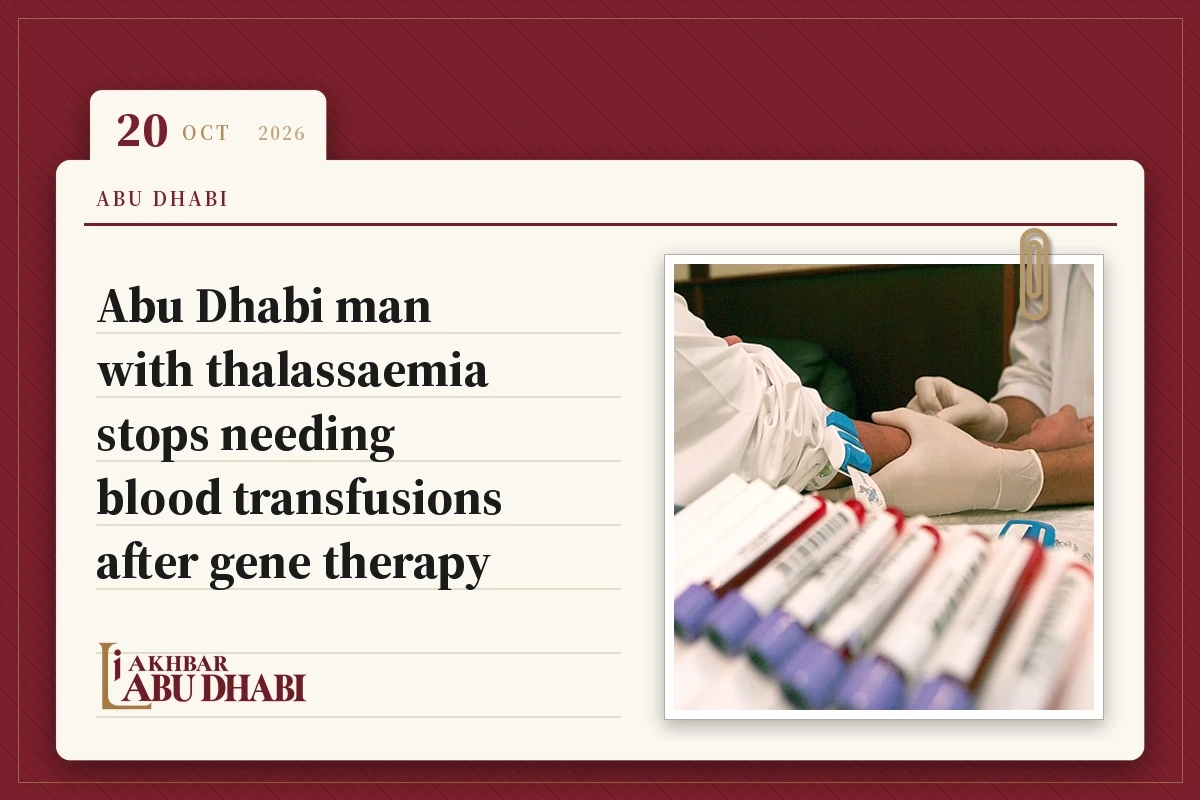
A 43-year-old man in Abu Dhabi who had lived with transfusion-dependent thalassaemia for years has become free of regular blood transfusions after undergoing gene therapy, achieving what officials describe as a medical first for the United Arab Emirates.
The patient, identified only as Fahad, had required treatment every three to four weeks to keep his haemoglobin levels stable. The condition also caused iron overload, which forced him to undergo continuous iron chelation therapy, seriously affecting his quality of life, the state news agency Wam reported on Tuesday.
Gene therapy procedure
About 18 months ago, Fahad was referred to Yas Clinic and the Abu Dhabi Stem Cells Centre (ADSCC). Scientists at the two centres were working to introduce advanced gene therapy for inherited blood disorders in the country. This approach has gained recognition as a long-term solution for patients who lack a suitable bone marrow donor.
Doctors identified Fahad as a suitable candidate. His treatment involved collecting his own stem cells, genetically modifying them in a laboratory and then reinfusing them into his body after preparatory therapy. Since then, he has remained under medical observation and no longer relies on transfusions.
Medical milestone
Dr Maysoon Al Karam, chief medical officer at Yas Clinic, said the case underscores the UAE’s commitment to making advanced therapies available to patients at home. ‘This marks an important milestone in expanding access to innovative treatment options and reinforces Abu Dhabi’s position as a regional centre for advanced health care and medical innovation,’ she stated.
Dr Mohammed Abu Haleeqa, a haematologist at Yas Clinic, described the outcome as life-changing for patients who have spent most of their lives dependent on regular transfusions. ‘Gene therapy offers the opportunity to address the underlying cause of the disease using the patient’s own genetically modified cells, providing an advanced treatment option for patients who may not have suitable donors for transplantation,’ he said.