Business Monday 19 October 2026
Oman poised to bolster Gulf energy security amid infrastructure push
By Abu Dhabi Desk
Economic outlook and strategic position
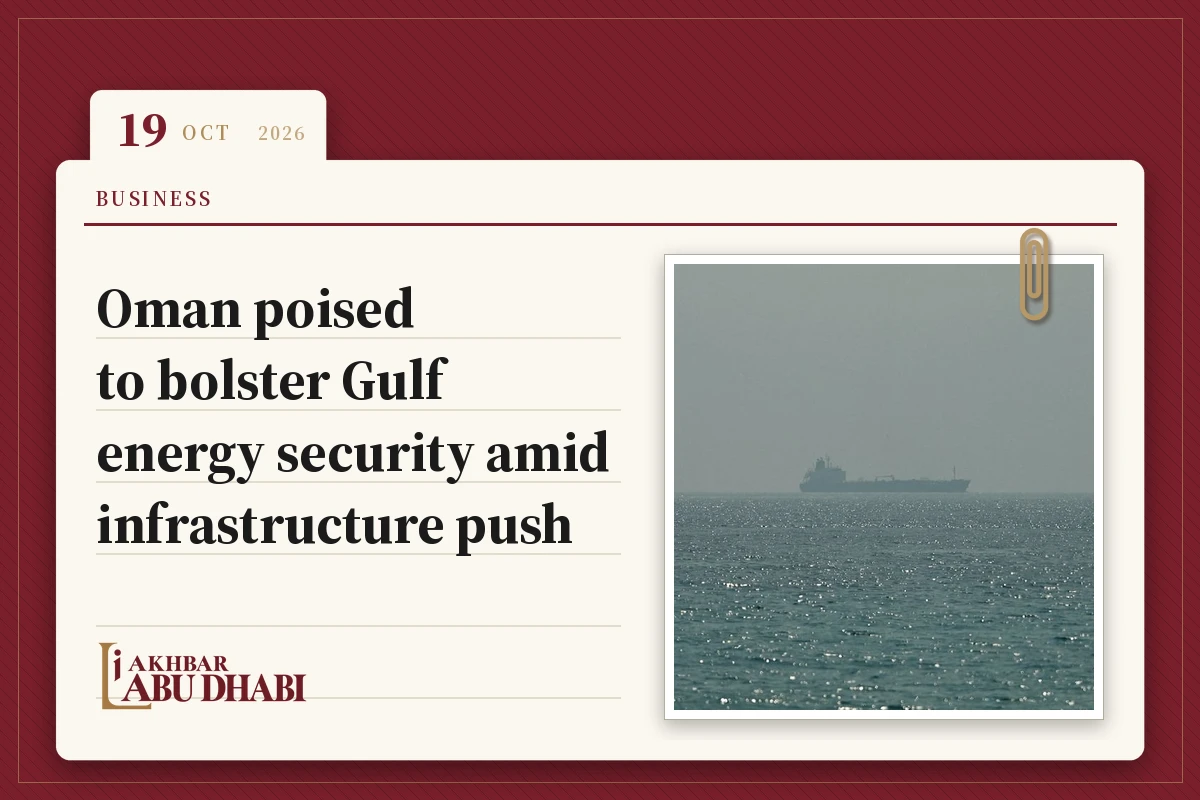
Oman’s historic maritime empire once reached from Mozambique and Zanzibar to Gwadar in Pakistan. Today the sultanate no longer controls those far‑flung territories, but it still occupies a vital spot overlooking the Strait of Hormuz.
The country has benefited economically from the ongoing conflict while also acting as a mediator for peace. Analysts suggest it could become a cornerstone of Gulf security.
The International Monetary Fund has cut its growth forecasts for the region because of the war, yet Oman is projected to expand by 4.1 percent. Its debt load has fallen from a worrying 68 percent of GDP in 2020 to a more comfortable range of 35‑36 percent of GDP.
Record oil and gas exports, high energy prices and a strong heavy‑industry sector in refined petroleum, fertilisers and aluminium have boosted Oman’s finances. Long queues of trucks at the UAE border underscore its importance as a transit route for goods.
Infrastructure projects and energy routes
Construction on the Hafeet Rail line began in May 2024 after forward‑looking planning. The railway will connect the industrial hub of Sohar with Al Ain and Abu Dhabi and is slated for completion in the final quarter of 2027. It will serve as a key conduit for industrial inputs into the UAE and for exporting finished steel and aluminium products.
By late next year Oman expects to finish a direct link to the GCC electricity grid, enabling greater power exchange and supporting its rapidly growing renewable‑energy sector.
Although Oman has tried to stay out of the fighting, its facilities have not been immune. Drone strikes hit the oil terminals at Mina Al Fahal, Duqm, Salalah and Sohar, and several vessels have been damaged in its territorial waters, including those crossing the Omani lane of the Strait of Hormuz. Overall, the sultanate has endured less physical damage and disruption than its Gulf neighbours.
In 2016 the then‑oil minister, Mohammed Al Rumhi, unveiled plans for a massive 200‑million‑barrel petroleum storage terminal at Duqm on the sultanate’s south‑east coast. For comparison, Fujairah – another wartime strategic node and a major global refuelling centre – holds about 120 million barrels. Muscat aimed to shift crude exports away from the congested northern coast to the new Duqm facility, which would also move shipments farther from Iran. The idea was that other GCC states could tie into Duqm as an alternative should the Strait of Hormuz be blockaded; Kuwait, lacking any other outlet, expressed interest. Kuwait Petroleum Corporation later invested in the large refinery at Duqm, but a dedicated pipeline seemed unnecessary at the time. Ultimately only 5.2 million barrels of crude storage were built, mainly to feed the refinery.
The situation changed after a rise in drone and missile attacks and after Washington decided to confront Tehran directly on the battlefield. Saudi Aramco is now examining a pipeline to Duqm that would stretch 1,000‑1,200 kilometres across the Empty Quarter’s dunes and cost roughly $7 billion. Such a line would bypass both the Strait of Hormuz and the Bab Al Mandeb strait. Saudi oil shipments via the kingdom’s East‑West pipeline to the Red Sea port of Yanbu have been hampered by Houthi attacks in Yemen and by Iranian‑aligned forces in Iraq.
A representative of Kuwait Oil Company told the World Energy Congress in Riyadh last week that Kuwait is assessing a possible route to Duqm, either directly or via the UAE or Saudi Arabia. The most likely option would involve loading oil onto tankers at a Saudi or Emirati port and then transferring it onward, rather than moving it entirely overland.
State‑owned energy investor OQ has announced intentions to raise Duqm’s storage capacity to 10 million barrels within three years, with a long‑term target of 40 million barrels. It is also looking at acquiring two tankers that could hold 4 million barrels in floating storage.
In September OQ signed a deal with a German firm to design a new marine bunkering site at the port of Shinas, just south of the UAE border. The planned facility would be about one‑third the size of Fujairah, which ranks as the world’s second or third‑largest ship‑refuelling hub.
Strategic risks and regional considerations
Despite these ambitions, Oman’s growing role in Gulf infrastructure brings three principal risks. First, its sites are not much farther from Iran than the rest of the Gulf, so they remain vulnerable to attack if hostilities intensify. Muscat could even find itself in the line of fire if Tehran decides it cannot tolerate too much bypassing of the symbolic Strait of Hormuz.
Second, should peace return, much of the new infrastructure might appear superfluous. New pipelines typically need three to five years to build, by which time regional politics and security could look very different. Projects might be halted midway or left underused, and Oman lacks the deep financial reserves of its wealthier neighbours that can afford heavy investment in strategic security.
Third, many of the proposed projects duplicate existing Gulf terminals, creating competition. There is already unease over Muscat’s occasional proximity to Tehran during its mediation efforts, most visibly in the debate over Strait tolls – essentially a form of Iranian extortion. While other Gulf states have suffered heavy costs in the conflict and wish to exploit Oman’s strategic depth, they are reluctant to render obsolete their own decades‑long investments in centres such as Fujairah, Jebel Ali and Yanbu, as well as newer projects at Khor Fakkan, Al Rugaylat and Dibba.
Past cross‑border ventures in Iraq, Syria, Turkey and Saudi Arabia have suffered sabotage, nationalisation or commercial breakdowns. Saudi Energy Minister Prince Abdulaziz bin Salman has warned that successful multinational pipelines require stakeholders from every side. Linking Gulf security to Oman therefore demands not only steel‑strong sinews but also political harmony.