Government & Services Saturday 17 October 2026
Abu Dhabi rolls out integrated network to rescue injured, stranded wildlife
By Abu Dhabi Desk
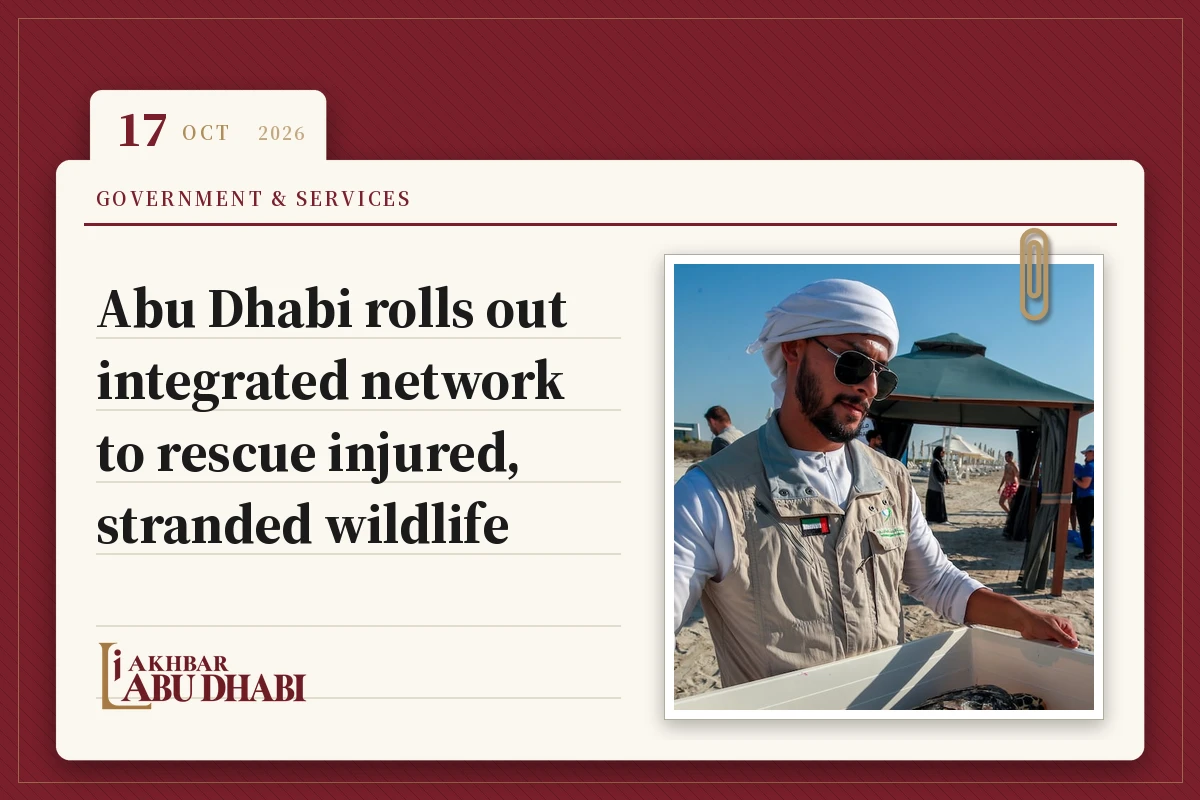
The Environment Agency of Abu Dhabi announced on Saturday the launch of the Abu Dhabi Wildlife Response Network, a co-ordinated framework designed to protect the emirate’s biodiversity. The network brings together government bodies, non-governmental organisations, academic institutions, private-sector partners and community members to improve the speed and quality of responses to wildlife in distress across the emirate.
Launch event and decade of experience
The announcement was made during an event on Saadiyat Island that ended with the release of rehabilitated sea turtles. Authorities also recognised individuals and organisations that have contributed to wildlife rescue and rehabilitation efforts. The network builds on the agency’s decade-long experience in wildlife rescue and rehabilitation, which began with sea turtles in 2016 and later expanded to include sea snakes, dugongs, dolphins and birds.
Digital framework and care
The initiative provides a digital platform for logging and managing rescue operations, dispatching field teams, overseeing rehabilitation and co-ordinating the release of animals back into their natural habitats. Maitha Al Hameli, acting executive director of terrestrial and marine biodiversity at the agency, said the network reflected the belief that protecting wildlife required quick action, deep knowledge and close collaboration. “Through this network, we are providing the care that injured or stranded animals need, giving them the best possible chance to recover and return to their natural habitats,” Ms Al Hameli said.
Data collected through rescue cases, monitoring of species’ health and mortality investigations will be used to strengthen conservation strategies and inform long-term recovery measures.
Future expansion
The agency plans to expand the network through real-time tracking technology, training for rescue teams and international collaboration to manage complex wildlife emergencies. Public education and engagement will also remain central to the initiative.